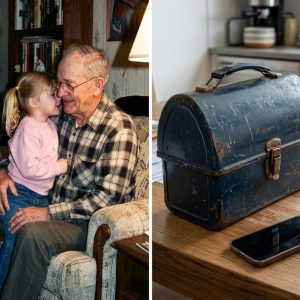
At my wedding, in the quiet moment when the music softened and the lights blurred into something warm and almost unreal, my grandfather placed an old passbook into my hands. It looked fragile, outdated—something that belonged to another time. Before I could even process it, my father stepped in, took it from me, and laughed. “That bank shut down in the ’80s,” he said, brushing it off like it was nothing more than a confused gesture from an old man. Others joined in, turning it into a joke, something to dismiss rather than understand. But my grandfather didn’t argue. He simply looked at me with quiet certainty and said, “Keep it. Not for now. For later.” I slipped it into my pocket, unsure of what it meant, but certain that it mattered more than anyone else believed.
Life, as it always does, moved forward and filled every empty space. Work demanded long hours, responsibilities grew, and soon there were bigger priorities—my wife, our child, the steady rhythm of building a life one step at a time. The passbook stayed tucked away in a drawer, buried under everyday things, quietly waiting. But my grandfather never became something I set aside. I visited him every Sunday, year after year, sitting with him through seasons and conversations that never felt rushed or forced. He was the only one in my family who saw value in what I did, who spoke to me as if my work, my effort, my life truly mattered. He never acted like a man with secrets or hidden wealth. That’s why the passbook felt like a mystery that didn’t fit the man I knew—until the day he was gone, and suddenly, everything he left behind carried a different weight.
After his funeral, where grief felt uneven and strangely shallow among the rest of my family, we gathered for the will. The house went to my father. The savings were split between my siblings. I received things that already felt like mine—his truck, his tools, pieces of a life I had shared with him long before he passed. And then came the reminder, spoken with a smirk, about the “antique bankbook.” That was the moment it came back to me fully, no longer forgotten or buried. The next morning, before work, I sat on the edge of my bed holding it again, feeling something settle inside me that hadn’t been there before. I knew I couldn’t ignore it any longer. When I walked into the bank later that day, dressed in work boots and a flannel shirt among polished floors and sharp suits, I already felt out of place—but not uncertain. Not anymore.
The teller took the passbook politely, typing with casual focus at first, until something shifted. Her expression changed—not dramatically, but enough to make the air feel different. She paused, looked at the screen again, then at me, and quietly asked me to wait. Moments later, she returned with the branch manager and another man whose presence alone carried weight. They stood in front of me with a seriousness that didn’t match the faded little book I had brought in. One of them studied it carefully, then looked up and said my name in a tone that made my chest tighten. In that moment, I understood that whatever my grandfather had given me was never meant to be small, never meant to be dismissed—and if you want to know what they discovered inside that forgotten account, you’ll need to scroll below to read the rest of article.