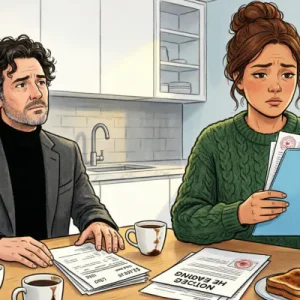
I was 34 weeks pregnant, standing in a house that no longer felt like mine, surrounded by unpaid bills and the hollow silence of someone who had already walked away. Lee hadn’t argued when I told him I was keeping the baby—he didn’t fight, didn’t plead, didn’t stay. He simply vanished, as if my existence had suddenly become inconvenient. That morning, the call from the bank made everything final. Foreclosure. The word echoed long after the line went dead, but I couldn’t even remember how the conversation ended. I just stood there, frozen, one hand resting on my stomach, whispering apologies to a life that hadn’t even begun yet. “I’m trying,” I told her softly, my voice trembling. “I really am.” She kicked back—strong, determined—like she already understood something I didn’t.
I needed air, something that didn’t feel like suffocation wrapped in panic. So I stepped outside into the heavy heat, the kind that clings to your skin and makes each breath feel like effort. The sunlight was harsh, almost unforgiving, but it was still better than the walls closing in behind me. That’s when I saw Mrs. Higgins. Eighty-two years old, fragile but stubborn, standing behind a rusted lawn mower, trying to tame grass that had long outgrown her strength. She noticed me and smiled, but it was the kind of smile that hides more than it reveals. “Beautiful day,” she said, as if the blazing sun wasn’t draining every ounce of energy she had left. For a moment, I hesitated—I should have gone back inside, back to my problems, my pain, my crumbling life.
But something about her stopped me. Maybe it was the way she held onto that mower, like letting go meant surrendering more than just a task. It was pride, dignity—something deeper than stubbornness. My back ached, my feet were swollen, and my future felt like it was slipping through my fingers, yet I couldn’t ignore her. “Let me help,” I said, stepping closer despite every part of my body protesting. She resisted, of course. People like her don’t give up control easily—they carry their independence like armor. But after a quiet moment, she finally released the handle, her hands trembling slightly as she stepped aside.
And so I pushed. Each step felt heavier than the last, the weight of the mower nothing compared to the weight I carried inside me. The heat blurred my vision, stole my breath, and sent waves of exhaustion through my body, but I didn’t stop. Because in that moment, helping her felt like the only thing holding me together. My life might have been unraveling, thread by thread, but with every pass across that overgrown lawn, I felt something shift—like maybe, just maybe, I wasn’t as powerless as I thought.Read More Below