I never imagined I would get paid to become someone else’s son. At the time, it felt less like a choice and more like survival. Every night after work, I sat in my delivery van outside my mother’s apartment building, staring at bills I couldn’t afford. Rent was overdue, her medications kept getting more expensive, and every paycheck disappeared before it even reached my account. One rainy night, after realizing I was short once again, I carried groceries and medicine upstairs. The next morning, while grabbing coffee between delivery shifts, a well-dressed stranger approached me with an offer that sounded unbelievable. His mother, Rosie, had dementia and believed her son never visited. For $500 a week, he wanted me to pretend to be that son.
The offer felt wrong, but I couldn’t stop thinking about my own mother’s medical bills. Against my better judgment, I accepted. That Saturday, I walked into Rosie’s nursing home room feeling like a fraud. She sat quietly by the window, wrapped in a blanket, and when I introduced myself as “Tim,” her face immediately brightened. She welcomed me with warmth and affection, asking if I was eating well, sleeping enough, and taking care of myself. Those simple questions hit harder than I expected. I had come to play a role, but instead I found myself sitting beside a lonely woman who genuinely cared.
What began as a weekend obligation slowly became something much more meaningful. I started visiting during lunch breaks, stopping by on random weekdays, and bringing flowers or chocolates just to make her smile. Rosie shared stories about her life, her family, and memories from years gone by. Somewhere along the way, pretending became impossible. I wasn’t acting anymore—I genuinely cared about her. Then, during one unusually clear moment, she took my hand, looked directly into my eyes, and said, “You’re a good man, son.” I assumed it was the dementia talking. I had no idea how much she truly understood.
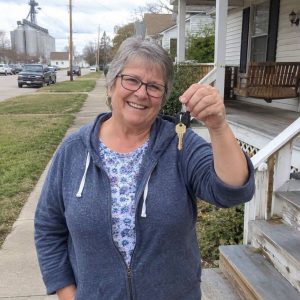
Two days later, the nursing home called to tell me Rosie had passed away peacefully in her sleep. When I arrived, the director handed me a sealed envelope and revealed a shocking truth: Rosie had known from the very first visit that I wasn’t her real son. She had figured it out immediately but asked the staff not to tell me. With trembling hands, I opened her letter. The first line read, “My dear boy who is not my boy.” Through tears, I learned that although her memory often failed her, her heart had not. She knew I wasn’t Tim, but she chose to keep me in her life because, unlike her real son, I stayed. Inside the envelope, along with her final words, was a small brass key.