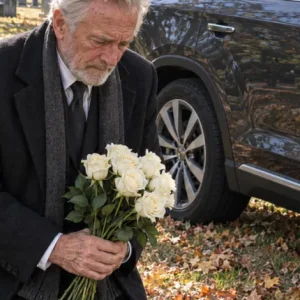
The day they told me my husband was dead, my entire world collapsed in a single breath. The police said his car had swerved off the highway during a storm and slammed into the guardrail before bursting into flames. They called it an accident, a tragic loss caused by poor visibility and wet roads. I remember standing in the hospital hallway, unable to feel my legs as doctors and officers spoke around me like I wasn’t even there. At the funeral, everyone praised him as a loving husband, a loyal employee, and a man who worked too hard for everyone else. I cried until there were no tears left. For weeks afterward, I slept on the couch because I couldn’t bear to walk into our bedroom and see the empty side of the bed where he used to sleep.
A month after the funeral, just when I thought the worst had finally passed, my phone rang late at night. It was his boss, Richard. His voice sounded nervous, almost frightened. He said there was something my husband had left behind in his office — a file hidden inside a locked cabinet with my name written across the front. Richard kept repeating the same sentence over and over: “You need to see it before the authorities do.” My stomach twisted into knots as I drove to the office building the next morning. Richard looked pale when he handed me the thick black folder. Inside were photographs, printed emails, bank statements, and handwritten notes in my husband’s writing. At first, none of it made sense. But then I saw the names of city officials, construction companies, and enormous amounts of money being transferred between accounts. My husband hadn’t been working overtime for promotions. He had been secretly investigating corruption inside the company he worked for.
As I read deeper into the file, my hands began to shake uncontrollably. My husband had discovered that several executives were bribing inspectors to approve unsafe bridge materials for state construction projects. One note stopped me cold: “If anything happens to me, it wasn’t an accident.” I read the sentence at least ten times before I could breathe again. Suddenly, every strange thing from the months before his death came rushing back to me — the nights he came home paranoid, the burner phone he hid in the garage, the way he kept checking the windows before going to sleep. I remembered asking him if something was wrong, and he simply smiled and said he was “handling it.” But he wasn’t handling it. He was terrified. And now I understood why his boss had sounded so desperate. If the wrong people learned that I had this file, I could become the next problem they needed to erase.
That night, I sat alone in the kitchen staring at the final page of the folder, where my husband had written a message directly to me. “I’m sorry for leaving this burden on you, but I didn’t know who else I could trust.” I broke down completely when I read those words. The man I buried had spent his final weeks trying to expose something dangerous enough to get him killed, and he had carried that fear all by himself to protect me. For the first time since his funeral, I realized my grief was no longer just sadness — it was anger. The authorities eventually reopened the investigation after I turned over the evidence, and the so-called accident began to look very different under scrutiny. But even now, long after the headlines faded, I still replay our last conversation in my head every night, wondering if he knew he was saying goodbye.